Showing posts with label Pope Benedict. Show all posts

Thursday, December 18, 2014

"Hail, full of grace! The Lord is with you."


On the carefully programmed Advent journey to Christmas, December 21, 2014, the Fourth Sunday belongs to Mary. This is so because Christmas, which celebrates the birth of Jesus, necessarily involves the motherhood of Mary. Our Discussion Questions will guide your Sunday Bible Study with family, friends and church groups.

Also on this last Sunday of Advent we begin more intensively to prepare for the celebration of Christmas. There are the many practical things to do: the buying of presents, the shopping for food and all the necessities of a great feast. But we do not forget that this great feast is in honor of the Lord and we take time to prepare ourselves spiritually as well.

God's Promise to David

Sunday’s Scripture texts describe God’s promise to David and its fulfillment in Jesus, the Son of David. From the First Reading, David expresses his sincere desire to build a temple for God but it is actually God who will build his own house and establish a great family of descendents: the House of David. Fr. John J. Ludvik say this meant God would actually become personally present among humankind through David’s descendant, Jesus the Messiah.

The amazing thing about this promise by God is that it does not depend on David's worthiness. David had committed adultery with Bathsheba and then had her husband killed. In the Psalms we hear echoes of David's repentance. Fr. Alex McAllister SDS explains that we ourselves are indeed spiritual descendents of David. And Fr. Phil Bloom says there is also a message here for us: Not to go out and sin, but to know that every day we depend on God's mercy - and his promise.

Hail Mary, Full of Grace

"Hail, full of grace, the Lord is with thee." For nearly two millennia Catholics, and other Christians, have committed to memory these words of the angel Gabriel as they pore devotedly over the sacred scriptures. The angelic salutation, now incorporated into the prayer of the Hail Mary, is sent up to heaven millions of times each day from every corner of the globe. Father Cusick says our frequent repetition of these words can dull our sense of awe for the fantastic event which they announced: the incarnation of God.

Fr. Demetrius R. Dumm, O.S.B. points out for us the fact that when considered specifically as the mother of our Savior, Mary is also the most perfect model of fruitfulness. Mary models for us a life that is wonderfully fruitful through loving concern for the welfare and happiness of others. And the challenge we face according to Fr. John Foley, S. J. is this: How much do you and I listen to the voice of God’s promise, written in our hearts? Do our words and actions tumble out without reference to that unwavering love deep within?

The Word Became Flesh

Our Readings this Sunday place us at the origin of the human existence of the Word of God. The word became flesh in Mary’s womb. One does not require a massive brainpan to conclude that the awesome entry of God into the body of an itinerant preacher named Jesus of Nazareth was no hit and run accident. It was set from day one. Fr. James Gilhooley explains that for God the long journey was part of the gift to us.

Fr. Ron Rolheiser discusses the virgin birth. He said it should invite imitation rather than admiration. What is at issue, he points out, is not celibacy rather than sex but patience rather than impatience. It is about accepting to live in tension rather than capitulating and compensating in the face of unrequited desire. Paul Dion, STL meanwhile answers a question frequentl;y asked: Was the Blessed Virgin Mary a Virgin Forever?  ...

Meanwhile, Fr. Orlando Sapuay, M.S. explains that The Word came to Mary looking for far more than accommodation. He became flesh of her flesh. That means our flesh, human nature. This means whatever God the Father gave His Only-Begotten Son in human nature, He gave all this to all of us. The Annunciation therefore is not to Mary alone, but to you and me. Each one of us has part of God's plan. We are not merely part of the audience. We are actors in the eternal Christmas pageant. Fr. Joseph Pellegrino reminds us that like Mary, we can make the spiritual physical. No, we can’t give birth to the Savior, but we can make His Presence a reality in the world.

It is a continuing miracle that the whole world pauses to celebrate at Christmas. Far more marvelous is the blessed Christian for whom the lights, festive parties and gift-giving are only signs of the real source of abiding joy: the gift of Jesus, "He who saves his people from their sins." Prepare well for a truly merry, blessed, 'Christ-Mass'.

Preparing for Christmas

We recall this Christmas message from Pope Benedict two years ago when he said Christmas is not a fairy tale for children. It's a message that's equally valid today. Christmas is much more than the season of Santa Claus and sugar plums. It is God's answer to mankind's yearning for peace.

Meanwhile, Msgr. Charles Pope discusses the many paradoxes and seeming impossibilities in the incarnation. He reminds us that as mysteries they cannot be fully solved, so they claim our reverence. As we approach Christmas lists some of the paradoxes of Christmas, saying as little of them as possible, just enough to make the paradox clear. And do you know the twelve days of Christmas? It starts on the evening of Christmas Day and end on the morning of Epiphany (January 6th).

And Dr. Lilles offers a pathway for prayer in Advent. He reminds us that Advent is a time for opening our hearts to the Lord with contrition-filled prayer. It is the most important thing we can do to prepare for the joy of Christmas. He says not to do so is to prefer to live in self-contradiction, a cold dark misery not worthy of human dignity.

Celebrating the Holidays

Jennifer Fulwiler was doing Christmas cards this week when she catches sight of a certain person’s name and address, about half way down the third page of labels. Every time she see it, she winces because it reminds her of just how unsaintly she can sometimes be. This is a story about what hitting reply to an email instead of forward taught her about sin. And if you ever get in the same bind, here's a video that will tell you how to quickly untangle it.

It’s Christmas, so we’re singing carols. But the Blessed Virgin Mary merits only passing mention in a few carols or—even better—no mention at all in most. Michael Linton looks into it for us. Also, "Do You Hear What I Hear?" is one of the most popular Christmas songs today. Do you know the story behind the song? This popular Christmas song's plea for peace is as relevant today as when it was written—during the Cuban Missile Crisis.

As you ponder what presents to give friends and family, Dr. Marcellino D'Ambrosio's helpful thoughts offer a Catholic approach to holiday gift-giving. Similarly, Fr. Peter deSousa suggests that we share the gift of love with those who are lonely, suffering or in need.

Finally, this time of year, it's not out of this world to hear about generous folks going around and dropping coins in parking meters or picking up a round of drinks for strangers at the bar. But some truly secret Santa has helped out three Michigan Kmart customers by picking up their layaway tabs. Really.

Another eventful week in our Catholic World. Have a great and blessed new week.

Keep the Faith. Peace.

Wally Arida
Publisher & Editor in chief

BURNING QUESTION: Was the Blessed Mother a Virgin Forever?
FEATURED BLOG: The New Translation: What's Changed and Why
PASTORAL HISPANA: Maria la Virgen del Adviento

Right-click here to download pictures. To help protect your privacy, Outlook prevented automatic download of this picture from the Internet.
Post a comment.
Follow us on Twitter
Click Here to receive a FREE SUBSCRIPTION to this weekly email
--

Thursday, November 13, 2014

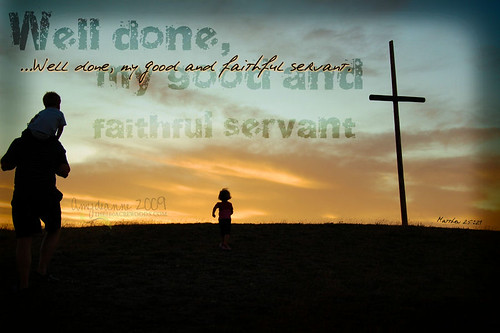
"Well done, my good and faithful servant."


Jesus has some words this Sunday about investing what we receive. He tells the famous parable of the talents. The man who receives five talents, put them to work and made an additional five. The second receives two and makes two more. But the man who receives one talent, buries it. Jesus calls him "wicked" and "lazy." Our Discussion Questions will guide your Sunday Bible Study with family, friends and church groups.

A Different Kind of Accountability


This Sunday's Gospel story presents us with the last of the three parables that form Jesus' final discourse in Matthew's Gospel. Each of the three parables relates a different kind of accountability required of Christians as they prepare for their glorious encounter with Christ.

The central message of today's Gospel parable concerns the spirit of responsibility with which to receive God's Kingdom: a responsibility to God and to humanity. When the Master gives the servants the talents to look after he basically turns them from servants into managers. Fr. Alex McAllister SDS says they are now expected to make decisions about how to manage the vast amount of money placed in their care. But despite this promotion, Father Cusick points out that we all remain servants of God. And we are still responsible to God for the way we use the abilities He has given us.

We are also to realize that like the three servants in Sunday’s Gospel, what each of us has been given is different. Some of us have received short straws. So, Fr. John J. Ludvik explains, Jesus does not expect us to “measure up” to our neighbor, per se. But we are nevertheless expected to give life a first class run with these gifts. We are not to bury our talents. How we use our abilities to enrich and help others is our fulfillment of Christ's command to love others as we love ourselves. And Love, explains Fr. John Foley, S. J., is the only one thing he knows spiritually that goes away if it is buried, but which gets greater if used.

Fear Factor


We live with fears. Fr. Orlando, Sapuay, M.S. says some of these fears are so complex or long-standing that we don't even know how we got them or where they originate. But in this passage, the one-talent man not only confesses he was afraid, but he gives us a hint of why that is true. The Good News of Jesus Christ, Fr. Thomas Rosica, CSB explains, is that we must abandon fear and be industrious, reliable and creative in doing God's will, lest we turn out to be like the third slave, "worthless, lazy louts"!

Our failure to take heed of the rest of what Jesus has said has sometimes made for a spirituality that is a half-truth. Fr. Ron Rolheiser warns us that in the name of religion, we have sometimes become unhealthily fearful, timid, and guilt-ridden. This means that the mere avoidance of serious sin does not make for good Christians. And if we are not moving forward, as Fr. James Gilhooley wisely cautions us, chances are good we march full speed backwards. So, perhaps we should extend the meaning of the parable a little further and think of the many ways that the life entrusted to us can be wasted, even without doing evil things. Fr. Campion P. Gavaler explains this in his reflection.

Be Ready for the End

Should we be afraid of death? Should we be afraid of the end of time? Fr. Joseph Pellegrino quotes St. Paul who tells the Thessalonians - we know that we should but we shouldn’t be afraid that it will catch us off guard. And what is the antidote to fear? It is this: an attitude of gratitude. Whatever God has given you, Fr. Phil Bloom urges us all, thank Him and ask his help to invest it as best you can.

Feast of the Dedication of St. John Lateran Church


Last Sunday, we celebrated the Feast of the Dedication of the Major Basilica St. John Lateran. It is one of those few feast days on the Church’s calendar that require some digging before its value is even minimally appreciated. When we do invest the time, the yield is rich. So Sr. Margaret J. Obrovac, FSP took out her shovels and uncovered some gems. Paul Dion, STL also takes this opportunity to communicate an important element of our Catholic Faith tradition that we do not often consider. It has to do with the churches that have played an important role in our history as Christians.

Purposeful Prayer, the Bible & Catholic Wellness


It may surprise you to learn that America is decidedly pro-Bible. According to research commissioned by American Bible Society, Barna Research polled 2,000 Americans and discovered that nine out of 10 households own a Bible. A full 86 percent of people surveyed indicated that they consider the Bible to be sacred or holy. That’s the good news. The bad news is why aren't they reading it?

This reflection by Msgr. Charles Pope may help us understand the role the Bible plays in our lives. He says only with God’s help can we begin to realize that “The Most important things in life aren’t things” is more than a slogan. Only with God’s help and a lifetime of grace can we ever hope to really appreciate this insight and absolutely true. In heh second of his two-fer reflection on the Bible, he looks at the story of St. Paul’s arrest, beating and imprisonment at Philippi that serves as a kind of paradigm for the radicality of true Christianity and why it so perturbs many in this world.

Cheryl Dickow also delivers her own two-fer this week. In the first one, she talks about Catholic Health and Wellness. She expresses how she has come to realize that while the initial good intention is a necessary first step to health and wellness, a viable course of action must accompany it—preferably something not too painful, boring, or time-consuming. And in her second reflection, she warns about how we often try to insert our own liberties and try to direct God in our prayers every time we suffix the words "so that..." to them. Think about that for a second.

From the Vatican, two stories likewise come down from the pope. ‏First, Benedict XVI is recommending that young people use the Gospel as they make future plans. And secondly, he reminds the world that death and life in Christ is more than a changing season. He says God's intervention in the drama of human history does not obey any natural cycle. It only obeys His grace and faithfulness.

Top Ten Lists

Here's a couple of Top Ten lists we encountered this week. The first is "10 Steps To Get Involved in the Pro-Life Movement" by Susan B. Anthony. You might have said to yourself: I am opposed to abortion, I want Roe v. Wade to be overturned, I want pro-life heroes to be leading our country and the states, but HOW? This article's for you.

The second list presented by Donna Hicks is a bit more philosphical. It talks about powerful internal self-preservation forces we have that can be so harmful if we don’t develop an awareness of them, and learn how to restrain them. She calls her list the “Ten Temptations”-- ways to maintain your dignity when your instincts think they know better.

Church-Goers and Not


A Gallup report that fewer Democrats than Republicans tend to be churchgoers. About 52 percent of Democrats or those who lean Democrat seldom or never attend church. Among Republicans or those who lean Republican, 38 percent say they seldom or never attend church. Do what you wish with these numbers, but one soul turned away from God - regardless of political party affiliation - is one too much. So we Catholics have our work cut out for us.

Which brings us to the church-goers, some of them you've talked to when they knocked on your doors many times in the past. I am talking about the Protestant missionaries the likes of which I have had the frequent pleasure of entertaining on my front porch for Bible sharing. And I must admit equally for frequent Bible misunderstandings. I can't help but share this funny story from Patrick Madrid. It is a hysterical albeit mythical account of an encounter between a pair of Mormon door-knockers and a Jehovah's Witness homeowner. I mean no disrespect by sharing this tale. But there are some Catechetical lessons Catholics can learn from this.

We Need Your Help Today

For the first time ever, we are sending out an appeal for assistance from our readers. It is no secret that this economy has been hard on Catholic parishes. And it has not been easy for us as well. The Gospel for this Sunday tells us that what Christ has given us is multiplied in its giving.So we ask you to please consider giving a financial gift to our ministry. We will use your gifts - all 100% of it - to construct parish websites and mobile apps for the many needy parishes that currently wait for us to gift them with our service ministry.

Proverbs 19:17 tells us: "He who is gracious to a poor man lends to the LORD, and He will repay him for his good deed.” Your assistance to us will indeed be a good deed in the eyes of God. For you are not just helping our ministry. You are also helping many communities of faith stay strong to their Catholic roots, beginning with the grateful parish members of St. Aloysius Catholic Church in Buckley, WA. Please click here to send your contribution.
Another eventful week in our Catholic World. A blessed and happy new week to all.

Keep the Faith. Peace.

Wally Arida
Publisher & Editor in chief

BURNING QUESTION: Is it OK for God to get angry?
FEATURED BLOG: "So that..."

Post a comment.
Follow us on Twitter
Click Here to receive a FREE SUBSCRIPTION to this weekly email
--
Thursday, October 16, 2014

"Then repay to Caesar what belongs to Caesar"


This Sunday - October 19, 2014 - in Matthew's Gospel, the Pharisees try once again to entrap Jesus in His speech. They ask Jesus the question, "Is it lawful to pay the census tax to Caesar or not?" Our Discussion Questions will guide your Sunday Bible Study with family, friends and church groups.

The Hypocrisy of the Question


Jesus is fully aware of the hypocrisy of His opponents, and He does get the better of them. ut He does so with the simple truth. If Jesus supported paying tribute to Caesar, He would be discredited as a prophet. If however, He argued against paying this tax, it could be used later to portray him to the Romans as a dangerous revolutionary. Jesus' answer avoids taking sides in the question of the lawfulness of the tax. The answer took them by surprise and they went away and left him alone

They set a trap for Jesus, but fell into their own trap. Fr. Orlando Sapuay, M.S says that Jesus teaches us a dear lesson. When we adhere assiduously to the Word of God and to our Lord, in true repentance, the traps which others set for us will become their undoing rather than ours.

Service to Caesar


Are service to God and to Caesar compatible? The Lord commands not only to give to God what is God's (that is, everything), but also to give to Caesar what is Caesar's. Jesus’ response tells us that one’s citizenship does not have to be at odds with one’s faith. It is St. Paul who reminds us that the moment a person comes into contact with the currency of the country of which he is a citizen, he thereby acknowledges that he is obligated to pay for the support of that government, to obey its laws, to render that government obedience, fear and honor, in fact he is obligated to pray for that government (1 Timothy 2:2).

When government seeks to provide for the just welfare of its citizens, it is doing the work of God. We are to live completely the requirements of justice and peace in social relationships, and to work for the common good. As patriotic Americans, we need to participate in the affairs of our government responsibly and intelligently so that our public policies may reflect the wisdom and justice of God. Patriotism as a virtue means keeping the proper order of Christian priorities.

Father Cusick tells us how we have in our own day an abundance of conflicts between Church and state. Is a matter political or religious? If it's deemed political, many believe, the Church should have nothing to say. The old expression “My country right or wrong but my country,” is not valid for the Christian when that means participating in immoral acts. For example, Fr. Joseph Pellegrino illustrates, the Christian would be wrong to support and fight for abortion simply because abortion is a law of our country.

The Christian would also be wrong if he or she does not fight for just and moral laws. Whether opposing the culture of death or any tyranny of the political order, the Christian gives first allegiance to the laws of God. As Los Angeles Archbishop Jose Gomez says in his reflection on Respect Life Month, “This is who we are as Catholics.”

Just this week, our bishops alerted us to encroachments on the Church's legitimate autonomy. Fargo Bishop Samuel J. Aquila this week also predicted that government authorities may one day attempt to silence the Catholic Church in the United States. “We are in a very real clash," he said while warning that these encroachments could result in an erosion of freedom of religion in our country.

Fr. Phil Bloom says the US bishops are asking us to respond by putting God first. Our consciences belong to Him. The bishops' role is to teach, govern and sanctify. This business of applying moral norms to political activity in order to help form Catholic consciences falls under their teaching umbrella. This is covered in last week's re-release of the USCCB document "Faithful Citizenship." The point they are making is the truth. It is not, mind this carefully please, it is not to present just enough truth to an electorate in order to influence their vote toward one candidate over another. It is so that we Catholics can profess to the truth in faith and morals.

Giving to God what is God


If the image of Caesar was stamped on Roman coins that were to be rendered to him, the human heart bears the imprint of the Creator, the one Lord of our life. Fr. Thomas Rosica, CSB says God has marked us for his own and sent us on mission to the world. It means God put you and me into the world to sanctify it, to befriend the things of Caesar. And, Fr. John Foley, S. J. points out, we are to work in the world of sin - in spite of our own sins. Do our human projects make us better prophets, servants and agents of the Kingdom of Jesus?

And increasingly, Fr. Alex McAllister, SDS adds, we who believe are going to be put on the spot and asked to explain our beliefs to those who have absolute no prior knowledge of God and Jesus Christ. If we look around, Fr. Ron Rolheiser tells us, we see many of our friends who are pagans.They do not know that spirituality comes not from within ourselves but is a direct gift from God. Let us never be ashamed of working publicly for Jesus' kingdom, and telling people about Him.

Greed and Wealth

Protests and debates about the state of our economy banner our news headlines. Father Longenecker clarifies that he is a priest and not an economist. But it doesn't stop him from voicing this thoughts. He opines that the economic disaster we are now facing is the fault of individuals--not governments. Put very simply, individual people are lazy, greedy, thieves. He says this applies to politicians, bankers, stock brokers, financiers, CEOs of multi national companies and it also applies the underclass--the homeless, the indigent and the destitute--and everyone in between.

Rev. James V. Schall, S.J. adds to the discussion when he points out that the New Testament isn’t a textbook in economics or politics. The New Testament is interested in the poor. But it is also interested in rich young men who are asked to give their wealth to the poor and to follow Christ. While By Father John Flynn, LC adds another dimension to the mounting problems we face. Fewer children and diminishing numbers of married couples will have a significant impact on economic growth and the ability of governments to finance welfare programs.

Prayer, Spirituality & Eucharistic Adoration


In the face of all the disheartening worldwide economic news we see daily, Pope Benedict XVI urges the faithful not to give in to pessimism, adding, "Do not be afraid to live and give witness of the faith!"

Patrick Madrid reflects on his observation that over the last 25 years or so, he has noticed with bemusement an unfortunate trend in the United States in which an increasing number of lay people arrogate to themselves the title of “spiritual director.” He regard this as unfortunate because, except in certain rare exceptions, he thinks lay people are simply not qualified or competent to serve as spiritual directors. So he offers some thoughts on the important qualities to look for in a spiritual director.

And refelecting on the many causes of our spiritual estrangement, JonMarc Grodi discusses the fears that often cause people to hold tight to their lukewarmness about really pursuing God. He says it is there, alone in Eucharistic adoration, when this perilous question really comes to bear, “Are you there God?”

Teens, Facebook & God's Messengers


Simcha Fisher shares a few strategies for encouraging your husband to be a little more chatty. Her "How To Get Your Husband To Talk To You" teaches wives how to have an awful but necessary conversation.

Carmelite Sister Timothy Marie, O.C.D. talks about her grief and mourning over the recent death of another Carmelite sister she worked with closely. And just as she was at her wit's end, God sent her a messenger who arrived unexpectedly to console her - of all places on aisle 3 of the local Staples store!

Here's another unexpected messenger from God. And she comes to you on Facebook! "Poolesville Compliments" is an anonymous teen Facebook "friend" who has been taking to heart the pope’s challenge to use social media to make Christ’s presence felt. A great evangelization story of teens who are using Facebook for good.

Finally, what’s in a nickname? The many football fans among you will love this. Here are the stories behind the nicknames of the NFL’s 32 teams—and what they were almost called.

Another eventful week in our Catholic World. A blessed and happy new week to all.

Keep the Faith. Peace.

Wally Arida
Publisher & Editor in chief

BURNING QUESTION: What role does conscience play in our Christian lives?
FEATURED BLOG: The Bishops are Guilty of Being Honest
PASTORAL HISPANA: Jesus nos muestra como ser honestos

Post a comment.

Follow us on Twitter
Click Here to receive a FREE SUBSCRIPTION to this weekly email

Thursday, September 25, 2014

"Tax collectors and prostitutes are entering the kingdom of God before you."


This Sunday, Sept. 28, 2014 (26A), we read the Parable of the Two Sons. It is unique to the Gospel of Matthew is probably one of the most easily understandable of all the parables of Jesus. It describes a situation we can all identify with and one that we surely all have experienced. Some call this four verse parable the Better of Two Bad Sons. Our Discussion Questions will guide your Sunday Bible Study sessions with family, friends and church groups.

The parable was one of three parables Christ spoke in His last days. They are known in history as the Parables of Rejection. This day's Gospel was the first and shortest of the melancholy three. This Sunday we are also treated to one of the most beautiful passages about Jesus in the entire Bible. It is found in the Letter of St. Paul to the Philippians.

Obedience and Disobedience


The two sons in the parable this weekend have some promise. Their father has a vineyard of his own, something for them to inherit. The vineyard needs some work, and the father tells both to go and do it. One says no, but then eventually goes. The other says he'll go work, but never shows up. Number one son, who said no to his father but who went and did what his father wanted, is a type for sinners. Number two son, who says yes to the father but does not deliver, is a stand-in for the religious authorities of the day who were long on words but short on deeds.

Father Cusick explains to us that Jesus Christ came to fulfill the law, and commanded the people to do as the Pharisees taught according to the law. But he also warned against following their example. We should be like the first son and say "yes" just as he did, but we must also be as the second son who obeyed the father, though at first he refused. Talk is cheap, Dr. Marcellino D'Ambrosio tells us. It’s easy to make a promise. But keeping a promise is an entirely different matter, as this Sunday’s gospel makes abundantly clear.

It is about obedience and disobedience, says Fr. Alex McAllister SDS. It is about compliance and rebellion, about changing one’s mind in a positive way and changing one’s mind in a negative way. It is fundamentally about the choices we make in life. And it is about conversion and repentance, as Fr. John J. Ludvik explains.

A Warning Against Self-deception


Certainly in the parable, the father wants the best for both his sons. But the one never does the will of the father. Jesus uses the parable to describe human relations with God. Fr. Thomas Rosica, CSB says it offers a lesson for those who claim to be Christian, but do not worship as Christians or live the Christian life; compared to those who come to Christ later but never claimed to be righteous.

It is clearly a warning against self-deception. Fr. Orly Sapuay, M.S. reminds us how easy it is for the spiritual person to build up for themselves over the years the firm belief that they are doing God's will. They have an interior sense of this due to their prayer life, their personal spiritual activities, spiritual readings and so forth. Yet Fr. Demetrius R. Dumm, O.S.B. says all these become problematic when one's relationship with God is reduced primarily to observing rituals and keeping rules. It is a problem when we fail to see that we haven't changed the way we deal with our fellow men. When we remain judgmental, merciless, impatient gossips who look down on others as less than ourselves.

A Call To Work the Vineyard

We are called to work in the Father's vineyard. Fr. Joseph Pellegrino says the vineyard is your house and my house. The vineyard is your life and my life. The vineyard is that place where others are reaching out to us, seeking the love of Christ in us. And if we want motivation, as well as encouragement, solace in love, participation in the Spirit, compassion, and mercy, St. Paul says to look at what Christ did (Second Reading). Then you will not act out of selfishness, but will serve others humbly, as he did. Fr. John Foley, S. J.  says this is the ultimate motivation in Christianity.

In the final roundup, Fr. James Gilhooley points out that it is only by deeds that we prove what we are. It is only by actions that we establish whether we are genuine or faux. Fr. Phil Bloom says what counts is not the image that others perceive. What counts is our final state before God. So we turn to Sunday's Psalm for hope that we may grow in the true faith that Jesus speaks about in the Gospel because, as James Starke concludes, God remembers us not for our sins but in kindness.

Mass, Prayer, Sin & Guilt

A reader asks a very serious question from a reader: "What's the point of going to Mass if we’re in the state of sin?" And Fr. John Zuhlsdorf offers a great pastoral response you all must see. Meanwhile, related to this, Msgr. Charles Pope tries to navigate one of the trickier terrains in the moral world - the experience of guilt. It is understood here as a kind of sorrow for sin. On the one hand there is an appropriate sorrow for sin we ought to experience. Yet there are also types of guilt that can set up, either from our flesh or from the devil which are self destructive and inauthentic. Which bring us to the sin of Gossip. Here's a reflection on one of the more under-rated categories of sin: the sins of speech.

The Carmelite sisters are known as the Navy SEALs of spiritual warfare. Sister Laus Gloriae, O.C.D. offers tips for improving your prayer experiences. And she starts by suggesting we not use the expression “prayer experiences” at all. Hit the delete button on that one. Prayer isn’t just “an experience.” It is so much more. The good sister explains in more detail.

Why Virginity Matters

Jennifer Fulwiler was glancing at a list of saints’ feast days that fall during this week, when she this listed for September 23: St. Thecla, Virgin and Martyr. As she reflected on virginity and what it means in today's world, she began to realize that it is possible to live a fulfilling life without having sex. She also deduced that denying this fact alone is responsible for some of the worst scourges that plague the modern world: abortion, contraception, even homosexual acts. 

And speaking of the topic of homosexuality, Bishop James D. Conley introduces Courage, an apostolate that was founded in 1980 in New York and is now serving the Church in about 100 U.S. dioceses and in many countries overseas. “Speaking the truth in love” (Eph 4:15) about homosexuality is the work of Courage. And it begins by acknowledging that the truth of human sexuality can be known and lived. It trusts that the Church, which assures us that Christ has risen from the dead, also guides us in understanding the complex and controversial question of homosexuality.

Meanwhile, Kevin Lowry tackles Catholicism in the workplace and how tough it can be at times. However, with hardship always comes opportunity. He offers "3 Ways to Shock Your Co-Workers" using stealth workplace evangelization. They won't even know what hit them.

Life, Married Love and Becoming a Dad


Breast cancer survivor Pat Gohn touches on the exquisite and excruciating Life of Married Love. She notes how loving someone until death is as hard as it is beautiful. It is sacrifice, but also a well of deep, refreshing joy.

Matthew Archbold talks about how miserable men can be when their wives are pregnant because present for the conception, they're then faced with nine months of absolutely no specific responsibility. And then it happens. He describes the experience in "How I Became a Dad."

Someone’s out to get your teens — and Barbara Curtis say they mean business. A special PBS Frontline report named them “The Merchants of Cool” in their in-depth look at the aggressive marketing used to control how American teens spend their money. We look at how to "Consumer-proof your kids."

Finally, here's something for those who have lost their jobs. It's "10 things to do if you have just lost your job."

Another eventful week in our Catholic World. A blessed and happy new week to all.
Keep the Faith. Peace.

Wally Arida
Publisher & Editor in chief
BURNING QUESTION: Why Don't you Read the Bible?
FEATURED BLOG: A Reflection on the Sin of Gossip
PASTORAL HISPANA: Jesus nos habla de poner en practica su Palabra

Post a comment below.
Follow us on Twitter
Click Here to receive a FREE SUBSCRIPTION to this weekly email
--