Showing posts with label Mass. Show all posts

Wednesday, November 26, 2014

"Be watchful! Be alert!"


This Sunday, November 30, 2014, we celebrate the First Sunday in Advent. This marks the beginning of a new church year: the liturgical actualization for us of the saving events of Christ's life, death and resurrection. Our Discussion Questions will guide your Sunday Bible Study with family, friends and church groups.

 Because it is Thanksgiving weekend, I'm busy preparing Thanksgiving dinner for my family while multi-tasking this week's homiletics email for you. So we hope you understand why you're receiving a truncated version of your Catholic Living Today.

The gospel passage for Sunday proclaims the essential truth that will be celebrated in all its dimensions throughout the year -- namely, the "advent" truth that God has come in the person of Jesus Christ, and that the same Lord, now invisibly present through the Spirit, will come again in power and glory.

Another eventful week in our Catholic World. Enjoy the Thanksgiving weeken with your family and loved ones.

Keep the Faith. Peace.

Wally Arida
Publisher & Editor in chief

BURNING QUESTION: Did John the Baptist go straight to heaven when he died?

Post a comment below.
Follow us on Twitter
Click Here to receive a FREE SUBSCRIPTION to this weekly email
--

Thursday, November 20, 2014

"He will sit upon his glorious throne"


This Sunday, November 23, 2014 we celebrate the Solemnity of Christ the King. This is the Last Sunday of the Church Year. Through this feast the church is saying that all of our celebrations can be summed up in one statement: Jesus is our King, we serve him. Our Discussion Questions will guide your Sunday Bible Study with family, friends and church groups.
Universal King


But who is this Person we salute on the feast of Christ the King? Fr. James Gilhooley  says call Him anything you want - Christ the Sultan, Christ the President, Christ the Pharaoh. It is immaterial to Him. He remains the Son of God. The Acts of the Apostles tell us He turned history upside down by His resurrection. And this, Fr. Alex McAllister, SDS explains, is the Gospel paradox – that the High King of Heaven becomes lowly for our sake. That He who is to be worshiped by everything that lives and breathes becomes the one most despised of all, and dies in disgrace on the cross of Calvary.

Lord and Just Judge

Sunday's selection from the gospel of Matthew is very appropriate for the feast of Christ the King. It portrays Christ as a king who presides over the scene of the final judgment. Fr. Orlando Sapuay, M.S. says it also brings forth three Gospel truths that act as a filter with which to view the entire bible: Jesus is returning in glory; He will judge all nations; Calling Jesus “Lord” is not enough.

This kingdom of Christ, a reign of charity and peace, is for all. We the baptized are the agents through whom the social kingship of Christ will be realized. Father Cusick says the Lord sends us out as His disciples so that all mankind may be brought under His reign in the world. We are asked to do His work. But He respects and honors His subjects’ needs and desires - their free will. And that, explains Fr. John Foley, S. J., is exactly how a real King acts.

But what will the Last Judgment be like? Many will come before Him, not having commmitted offenses or infractions of the law. Thay might not have done anything positively destructive. But in the presence of suffering, they also heartlessly did absolutely nothing. Marcellino D’Ambrosio, Ph.D. notes that these sins of omission ultimately seal the fate of the damned. Fr. Demetrius R. Dumm, O.S.B. warns us that many on that last day will hear Him say, "You have chosen to live without me, your God, and I will respect your choice.”

"Lord when did we see you?"

As disciples of Jesus, we are called to make the kingdom of God a reality in whatever place we are, in whatever time we live. Jesus’ command to practice the corporal works of mercy is direct, uncompromising, and everywhere present in the entire New Testament. Fr. Ron Rolheiser points out that taken as whole, every tenth line in the New Testament is a direct challenge to the Christian to reach out to the physically poor.

Christ is present in those people we meet who are prayerful, spiritual, and charismatic. But, Fr. Joseph Pellegrino reminds us, the Lord is also present in those who may not even recognize His presence in their lives. He is present in those mocked by our society, the poor, the eccentric, the oppressed, the unborn. When we give help to a family struggling to make ends meet, we are helping Christ.

Thus the most plaintive line in our gospel story, Fr. John J. Ludvik explains, is the one that echoes twice from the dumbstruck crowd: "Lord when did we see you?" And, Fr. Thomas Rosica, CSB adds, the most stirring refrain of Sunday's Gospel is found precisely in these words: "You did it to me."

And so as we conclude the Church year, we ask the Lord to help us serve the Kings of Kings as He presents Himself in those reaching out to us.

Prayer, Communion & Pornography

"What the Catholic Church in the United States really needs to stiffen its backbone is a good persecution." How often have we heard somebody say something like that? How often have we said something like it ourselves? Be careful what you ask for—you just might may get it. The persecution of religion in America has begun. And Russel Shaw says the Catholic Church is its prime target.

Three years ago from the Vatican Pope Benedict made this call for daily prayers, "I would like to renew my call to everyone to pray the Psalms, to become accustomed to using the Liturgy of the Hours, Lauds, Vespers, and Compline. Our relationship with God can only be enriched by our journeying towards Him day after day.”

While back in the US, Taylor Marshall reflected on the teachings of St. Thomas Aquinas and the Council of Trent as he discusses "The Difference between Spirtual and Sacramental Communion." And Patrick A. Trueman tackles a scourge that is affecting so many Catholic men - Pornography. It has become America’s pastime, and we are awash in it.

A Catholic Thanksgiving

A curious question: Is “Thanksgiving” Catholic? The history books will tell you that the first Thanksgiving was celebrated by the pilgrims in 1621. Not true, explains Taylor Marshall. An interesting bit of trivia is that the first American Thanksgiving was actually celebrated on September 8, 1565 in St. Augustine, Florida. The Native Americans and Spanish settlers held a feast and the Holy Mass was offered.And did you know that it was President Abraham Lincoln who officially proclaimed it a holiday in 1863? His intent was crystal clear - as this reprint of his official proclamation will show - and it's as valid today as it was in 1863.

So how do you evangelize your family this Thanksgiving? Start with celebrating the day with Holy Mass. We are bound, if we are able, to observe the third commandment and keep the Lord’s Day holy by gathering together to give thanks. Eucharist after all means thanksgiving. But thanksgiving can’t be limited to Sunday Eucharist. Dr. Marcellino D'Ambrosio reminds us that we are called to develop a lifestyle of thanksgiving. We’re called to become a Eucharistic people.

What Are You Thankful For?


Anthony Duk shares a moving Thanksgiving story with a twist. It's the story of painful Thanksgivings and how a gift bouquet of thorns was able to offer a meditative respite for the holiday. And then Chris Mueller shares one of his favorite thanksgiving stories that takes place long before the pilgrims landed on Plymouth Rock. In fact this one goes back to a little town in Italy known as Assisi. And it's a story most famous for two of its most remarkable citizens - St. Francis and St. Clare.

As has been our Thanksgiving tradition, we bring you back our Thanksgiving Prayer Book. We reflect on how imperfect our lives always will be. How good things will always co-exist with the unfortunate ones. But despite this, there are many things God has blessed us with that we can be truly thankful for. Share your blessings with us.

Celebrating Thanksgiving

Thanksgiving is the busiest travel day of the year. Shuffling through airport security in your socks or sitting in traffic may seem like a breeze compared with the stresses of settling in under the same roof with family. Tensions often run high during the holidays, but there are polite and effective ways to manage those tricky interactions. Here's how to be a heavenly houseguest -- and keep your sanity.

Ours is a country where supersizing and soaring obesity rates have become the norm. So what is the best way to deal with our annual feast day? Streamlining. The key to a healthy holiday meal, we've discovered, is that less can be more. This Thanksgiving, celebrate without supersizing. Here are tips and recipes for a hearty, healthy Thanksgiving meal. And sure, we all know the holiday leaves us stuffed. But it's not just the extra calories that make us groggy. Here's the "Four Reasons Thanksgiving Makes Us Sleepy."

And so we gather at the Thanksgiving dinner table with big appetites and grateful hearts. But before anyone digs in, someone most likely will offer the customary blessing or prayer. When you sit down with family and friends and bow your heads to pray, what should you say? Here's a wonderful Thaksgiving dinner prayer suggestion from Deacon Greg Kandra.

We Need Your Help - An Update

We thank those of you who contributed to our Stewardship Drive. Our Gospel Matthew 25: 37-40 for this Sunday tells us:

"Then the righteous will answer him and say,
'Lord, when did we see you hungry and feed you,
or thirsty and give you drink?
When did we see you a stranger and welcome you,
or naked and clothe you?
When did we see you ill or in prison, and visit you?'
And the king will say to them in reply,
'Amen, I say to you, whatever you did
for one of the least brothers of mine, you did for me.'


Many needy parishes continue to wait for our help. And we ask you to help us help them. Our goal is to gift 10 needy parishes with their own parish evangelization websites. Your assistance will allow us to make a real difference in the Catechetical and spiritual lives of these parish communities.

The following characterize why our mission is so important:
First  - 95% of our Catholics in the pews are under-Catechized.
Second  - Over a million articles of evangelization are viewed each month in ParishWorld!

Everyday, we continue to make a difference in the spiritual lives of countless Catholics like yourself. If you haven't helped with our campaign, we plead with you, please consider a financial gift today. And 100% of your gifts - every single dollar - will go to setting up these gift parish websites.

We pray the Holy Spirit be your guide as you prayerfully consider a financial gift to support our mission. We have a long way to go to meet our Stewardship goal. Your small gift can and will add up to a wonderful and much anticipated holiday gift for the many parish faith communities in our waiting list.

Click here to donate today.

Another eventful week in our Catholic World. A most happy Thanksgiving to you and your family.

Keep the Faith. Peace.

Wally Arida
Publisher & Editor in chief

BURNING QUESTION: What are yout thankful for?
FEATURED BLOG: 'And with your spirit,' once again
PASTORAL HISPANA: Solemnidad del Nuestro Senor Jesucristo

Post a comment.
Follow us on Twitter
Click Here to receive a FREE SUBSCRIPTION to this weekly email
--

Thursday, November 13, 2014

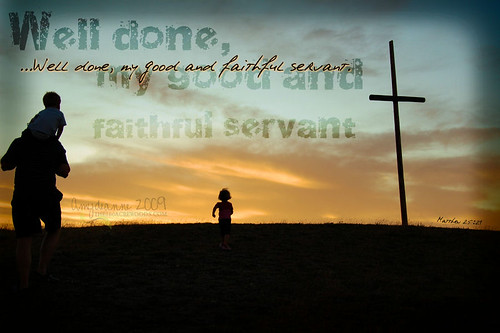
"Well done, my good and faithful servant."


Jesus has some words this Sunday about investing what we receive. He tells the famous parable of the talents. The man who receives five talents, put them to work and made an additional five. The second receives two and makes two more. But the man who receives one talent, buries it. Jesus calls him "wicked" and "lazy." Our Discussion Questions will guide your Sunday Bible Study with family, friends and church groups.

A Different Kind of Accountability


This Sunday's Gospel story presents us with the last of the three parables that form Jesus' final discourse in Matthew's Gospel. Each of the three parables relates a different kind of accountability required of Christians as they prepare for their glorious encounter with Christ.

The central message of today's Gospel parable concerns the spirit of responsibility with which to receive God's Kingdom: a responsibility to God and to humanity. When the Master gives the servants the talents to look after he basically turns them from servants into managers. Fr. Alex McAllister SDS says they are now expected to make decisions about how to manage the vast amount of money placed in their care. But despite this promotion, Father Cusick points out that we all remain servants of God. And we are still responsible to God for the way we use the abilities He has given us.

We are also to realize that like the three servants in Sunday’s Gospel, what each of us has been given is different. Some of us have received short straws. So, Fr. John J. Ludvik explains, Jesus does not expect us to “measure up” to our neighbor, per se. But we are nevertheless expected to give life a first class run with these gifts. We are not to bury our talents. How we use our abilities to enrich and help others is our fulfillment of Christ's command to love others as we love ourselves. And Love, explains Fr. John Foley, S. J., is the only one thing he knows spiritually that goes away if it is buried, but which gets greater if used.

Fear Factor


We live with fears. Fr. Orlando, Sapuay, M.S. says some of these fears are so complex or long-standing that we don't even know how we got them or where they originate. But in this passage, the one-talent man not only confesses he was afraid, but he gives us a hint of why that is true. The Good News of Jesus Christ, Fr. Thomas Rosica, CSB explains, is that we must abandon fear and be industrious, reliable and creative in doing God's will, lest we turn out to be like the third slave, "worthless, lazy louts"!

Our failure to take heed of the rest of what Jesus has said has sometimes made for a spirituality that is a half-truth. Fr. Ron Rolheiser warns us that in the name of religion, we have sometimes become unhealthily fearful, timid, and guilt-ridden. This means that the mere avoidance of serious sin does not make for good Christians. And if we are not moving forward, as Fr. James Gilhooley wisely cautions us, chances are good we march full speed backwards. So, perhaps we should extend the meaning of the parable a little further and think of the many ways that the life entrusted to us can be wasted, even without doing evil things. Fr. Campion P. Gavaler explains this in his reflection.

Be Ready for the End

Should we be afraid of death? Should we be afraid of the end of time? Fr. Joseph Pellegrino quotes St. Paul who tells the Thessalonians - we know that we should but we shouldn’t be afraid that it will catch us off guard. And what is the antidote to fear? It is this: an attitude of gratitude. Whatever God has given you, Fr. Phil Bloom urges us all, thank Him and ask his help to invest it as best you can.

Feast of the Dedication of St. John Lateran Church


Last Sunday, we celebrated the Feast of the Dedication of the Major Basilica St. John Lateran. It is one of those few feast days on the Church’s calendar that require some digging before its value is even minimally appreciated. When we do invest the time, the yield is rich. So Sr. Margaret J. Obrovac, FSP took out her shovels and uncovered some gems. Paul Dion, STL also takes this opportunity to communicate an important element of our Catholic Faith tradition that we do not often consider. It has to do with the churches that have played an important role in our history as Christians.

Purposeful Prayer, the Bible & Catholic Wellness


It may surprise you to learn that America is decidedly pro-Bible. According to research commissioned by American Bible Society, Barna Research polled 2,000 Americans and discovered that nine out of 10 households own a Bible. A full 86 percent of people surveyed indicated that they consider the Bible to be sacred or holy. That’s the good news. The bad news is why aren't they reading it?

This reflection by Msgr. Charles Pope may help us understand the role the Bible plays in our lives. He says only with God’s help can we begin to realize that “The Most important things in life aren’t things” is more than a slogan. Only with God’s help and a lifetime of grace can we ever hope to really appreciate this insight and absolutely true. In heh second of his two-fer reflection on the Bible, he looks at the story of St. Paul’s arrest, beating and imprisonment at Philippi that serves as a kind of paradigm for the radicality of true Christianity and why it so perturbs many in this world.

Cheryl Dickow also delivers her own two-fer this week. In the first one, she talks about Catholic Health and Wellness. She expresses how she has come to realize that while the initial good intention is a necessary first step to health and wellness, a viable course of action must accompany it—preferably something not too painful, boring, or time-consuming. And in her second reflection, she warns about how we often try to insert our own liberties and try to direct God in our prayers every time we suffix the words "so that..." to them. Think about that for a second.

From the Vatican, two stories likewise come down from the pope. ‏First, Benedict XVI is recommending that young people use the Gospel as they make future plans. And secondly, he reminds the world that death and life in Christ is more than a changing season. He says God's intervention in the drama of human history does not obey any natural cycle. It only obeys His grace and faithfulness.

Top Ten Lists

Here's a couple of Top Ten lists we encountered this week. The first is "10 Steps To Get Involved in the Pro-Life Movement" by Susan B. Anthony. You might have said to yourself: I am opposed to abortion, I want Roe v. Wade to be overturned, I want pro-life heroes to be leading our country and the states, but HOW? This article's for you.

The second list presented by Donna Hicks is a bit more philosphical. It talks about powerful internal self-preservation forces we have that can be so harmful if we don’t develop an awareness of them, and learn how to restrain them. She calls her list the “Ten Temptations”-- ways to maintain your dignity when your instincts think they know better.

Church-Goers and Not


A Gallup report that fewer Democrats than Republicans tend to be churchgoers. About 52 percent of Democrats or those who lean Democrat seldom or never attend church. Among Republicans or those who lean Republican, 38 percent say they seldom or never attend church. Do what you wish with these numbers, but one soul turned away from God - regardless of political party affiliation - is one too much. So we Catholics have our work cut out for us.

Which brings us to the church-goers, some of them you've talked to when they knocked on your doors many times in the past. I am talking about the Protestant missionaries the likes of which I have had the frequent pleasure of entertaining on my front porch for Bible sharing. And I must admit equally for frequent Bible misunderstandings. I can't help but share this funny story from Patrick Madrid. It is a hysterical albeit mythical account of an encounter between a pair of Mormon door-knockers and a Jehovah's Witness homeowner. I mean no disrespect by sharing this tale. But there are some Catechetical lessons Catholics can learn from this.

We Need Your Help Today

For the first time ever, we are sending out an appeal for assistance from our readers. It is no secret that this economy has been hard on Catholic parishes. And it has not been easy for us as well. The Gospel for this Sunday tells us that what Christ has given us is multiplied in its giving.So we ask you to please consider giving a financial gift to our ministry. We will use your gifts - all 100% of it - to construct parish websites and mobile apps for the many needy parishes that currently wait for us to gift them with our service ministry.

Proverbs 19:17 tells us: "He who is gracious to a poor man lends to the LORD, and He will repay him for his good deed.” Your assistance to us will indeed be a good deed in the eyes of God. For you are not just helping our ministry. You are also helping many communities of faith stay strong to their Catholic roots, beginning with the grateful parish members of St. Aloysius Catholic Church in Buckley, WA. Please click here to send your contribution.
Another eventful week in our Catholic World. A blessed and happy new week to all.

Keep the Faith. Peace.

Wally Arida
Publisher & Editor in chief

BURNING QUESTION: Is it OK for God to get angry?
FEATURED BLOG: "So that..."

Post a comment.
Follow us on Twitter
Click Here to receive a FREE SUBSCRIPTION to this weekly email
--

Thursday, October 23, 2014

"Teacher, which commandment in the law is the greatest?"

Sunday’s Gospel Reading - for October 26, 2014 (30A) - revolves around the question: “Which commandment of the Law is the greatest?” Another way to put this question is to ask, “What do I need to do to achieve salvation?” Our Discussion Questions will guide your Sunday Bible Study with family, friends and church groups.

In the Sunday Gospel according to St. Matthew we encounter Christ in conversation with a lawyer who has asked him a question, not in order to learn, but in a malicious plot to destroy Christ. Out of this evil intent Christ brings forth the beautiful gift of the "greatest commandment": "You shall love the Lord your God with all your heart, and with all your soul, and with all your mind. This is the greatest and first commandment. And a second is like it: You shall love your neighbor as yourself. On these two commandments hang all the law and the prophets."

In his response Jesus takes the opportunity to instruct His people to encourage us in the truth, teaching us about the foremost duties of life and teaching us about the proper biblical relationship between love and law.

A Two-fold Yet Single Commandment

Fr. Alex McAllister SDS shows us how the two commandments quoted are not original to Jesus. This is very old teaching. The command to love God is from Deuteronomy 6:5 and the command to love one’s neighbour is in Leviticus 19:18. But we do see three firsts, Fr. James Gilhooley points out to us. For the first time in Jewish theology, Jesus had taken the two concepts and made them two sides of one coin. Dr. Marcellino D'Ambrosio refers to it as the two-sided coin of charity. Also He was the first to argue that "on these two commandments hang the whole Law..." Finally, He was a complete original in telling His audience one must love Jews and Gentiles. The Gentiles were the ones the Pharisees loved to hate.

Henceforth, Father Cusick makes clear to us, Jesus tells us that the Decalogue, the ten commandments, must now be interpreted in light of this two-fold yet single commandment of love, the fullness of the Law.

“Love God and love your neighbor.”


Christian love is first and foremost about knowing God. It is a love, according to Fr. Demetrius R. Dumm, O.S.B., that comes from the goodness of God, the one who loves and reaches out instinctively to anyone who is in need. After that, it is about loving our neighbor. Love for God, explains Fr. Thomas Rosica, CSB, comes to its own identity through its fulfillment in a love for neighbor. It is in putting God first in our lives and incarnating that love through acts of sharing, service, commitment, prayer, hospitality, etc., Fr. John J. Ludvik adds, that we live that love and make Stewardship a way of life. It is the heart of our daily lives, the springboard of our actions, a practical way of life.

But we also learn something else from verses 37 through 40. Jesus shows us here implicitly that love to God and love to neighbor flow from God's love to us in Christ. You can't love God or love neighbor christianly, Fr. Orlando Sapuay, M.S. clarifies, unless you have experienced the love and the grace of God yourself. Fr. Joseph Pellegrino says it is the basis of our decisions, the reason for our prayer life.

Creeds and Laws

Inevitably we end up talking about creeds, dogmas, commandments, and boundaries. As in any tiny seed, there is present a fairly complete script for this love's health and growth. Fr. Ron Rolheiser says good creeds, dogmas, and commandments simply lay out that script for love so that it can be consciously read. Fr. John Foley, S. J. says we need these laws to help us. But the root of law and of life is fair care of others. It is loving concern under God for human persons. Ultimately it is an imitation of God’s love for us.

Mass, Decorum and Faith

A couple of weeks ago at a Mass celebration, a baby somewhere toward the back half of the church began screaming. It started at the Eucharistic prayer and lasted through the Sign of Peace. After several minutes of this, the priest stopped Mass and asked the parent to take the uncontrollable baby outside. As you might imagine, calls poured into the parish office either complaining about the priest or excusing the parents. Her bottom line? Sometimes things worth our time and effort come with rules and expectations. Mass should be one of them. Read her full essay here.

And any parent knows, Mass with defiant toddlers, wiggly preschoolers, and teething babies can be anything but peaceful. So as an adjunct to the above story, we bring you Kate Wicker's "7 Tips for Attending Mass With Young Children." And we think this article by Fr. John J. Ludvik is quite relevant to this discussion as well - "Proper Posture, Gestures and Observance During Mass." It is a greatly detailed teaching article that reminds us that the postures we use throughout the liturgy train our bodies so that Christ may live in us.

And here'ssomething that caught my eye because I was challenged about it by a Protestant friend just in the last week: "Does the Bible Prohibit Religious Images?" This topic is a real stumbling block for a lot of Protestant Christians, and even Catholics often are left a bit uneasy, unsure how to rectify what the Bible seems to say with what the Church teaches. So let's join Joe Heschmeyer for a serious discussion about idolatry and iconoclasm.

Effective Catholicism

How does one become an effective Catholic? Let's start with prayer. Sister Laus Gloriae, O.C.D. offers her "Ten Practical Prayer Tips from the Carmelite Sisters" in response to a reader query on how one can find some time to pray.

Then let's offer some practical tips. Ashley Crouch offers her advice to incoming freshmen — from someone with experience. She instructs them on "How to Be a Catholic Woman on Campus." While Marc Barnes talks about "Why It’s Great to Be a Young Catholic."

And there's more tips for you all this week. Borrowing an idea from Steven Covey's 7 Habits of Highly Effective People, this list compiles 7 Habits of Highly Effective Catholics. Emily Stimpson looks at the aftermath of Vatican II and offers a back-to-the-basics look at what Catholics should know. She calls it "10 Things Catholic catechists should know." Plus she gives us another list: 19 Words Every Catholic Should Know. It's a list adapted from the Diocese of Harrisburg’s “Basic Catholic Vocabulary.” And to top off our set of lists this week, here's Travis Ketner's five reasons why you should vote in every election.

Bob Hope and His Ladies of Hope

Bob Hope — “the most honored entertainer” ever, according to the Guinness Book of World Records, for his achievements in theater, radio, film, TV, philanthropy and business, and an extraordinary record of service to country, with 199 USO shows around the globe — won the biggest prize of all in the waning days of his life when he converted to Catholicism. And he had his mother, wife and Our Lady of Hope to thank for making all the difference in his life.

Finally, Leila Miller talks about why she should never have had eight children. Had she listened to the devil and modern conventional wisdom, that is.

Another eventful week in our Catholic World. A blessed and happy new week to all.

Keep the Faith. Peace.

Wally Arida
Publisher & Editor in chief

BURNING QUESTION: What commandments require restitution?
FEATURED BLOG: Does the Bible Prohibit Religious Images?
PASTORAL HISPANA: Jesus Nos Invita a un Amor Integral a Dios y al Projimo
Post a comment below.
Follow us on Twitter
Click Here to receive a FREE SUBSCRIPTION to this weekly email

--

Thursday, October 9, 2014

"Many are invited, but few are chosen."


This Sunday the Church presents for our consideration the wonderful parable of the royal wedding banquet. Our Discussion Questions will guide your Sunday Bible Study with family, friends and church groups.

Invite Everyone to the Banquet

The message of this parable of the royal wedding banquet is clear. God invites the people of Israel to his wedding banquet in heaven but despite the fact that they have enjoyed his favour over so many generations they do not come.

Jesus shed His blood for all. Fr. Phil Bloom affrims to us that our Lord invites all to the heavenly banquet. And this, Fr. Alex McAllister SDS says, is certainly good news for us. We are Gentiles and we have taken up God’s invitation and we are here at the great banquet he has prepared for us. In Christ, the abundance of the kingdom of grace and peace, the banquet of God's goodness, is poured forth for all: "...you must go out into the byroads and invite to the wedding anyone you come upon." For God, Father Cusick explains, there is no "A" list or "B" list. All are called to accept adoption as His sons and daughters, and to share the bounty of the wedding hall.

But one of the most dangerous temptations for traditional Christians, cautions Fr. Demetrius R. Dumm, O.S.B., is an easy assumption that they have responded to God's invitation and are now comfortably seated at the banquet waiting for their final and inevitable heavenly reward. This temptation is so insidious because it really is based on the fact of faithful religious observance.

Proper Attire for the Feast

Matthew's addition of the guest without the wedding garment can certainly leave the reader perplexed. As early as the second century, Irenaeus wrote that the wedding garment signified works of righteousness. Fr. Thomas Rosica, CSB tells us today that it signifies repentance and a change of heart and mind. This is the condition for entrance into the kingdom and must be continued in a life of good deeds. To illustrate this point, Fr. Joseph Pellegrino speaks about how Jesus took a man named Saul, a man who murdered Jesus’ first followers, and transformed Saul into Paul, the great apostle of the early Church.

The Lord does this for each of us. He takes each of us, with all our humanity, with all our weakness, and He uses us to make Him present to others. He does this, explains Fr. Orly Sapuay, M.S., because our faith is a love story, not a strategy. It is loving the greatest lover of all. He says now is the time to begin weaving our garments, to begin loving God with our whole soul, and heart, and strength, and to begin loving our neighbors as ourselves. Now is the time to seek that selfless love—to put on that spotless wedding garment—that will save us.

The Banquet of the Eucharist

Sunday’s readings also foretell a messianic banquet. Isaiah, chapter 25, describes the meal as both earthly (“on this mountain”) and heavenly (“he will destroy death forever”). Fr. Demetrius R. Dumm, O.S.B. explains that Jesus did not just mean a kingdom located in heaven. He also meant a community of believers on earth who accept the rule of God and who hope to find a place eventually in heaven. And this kingdom, though only fully realized in the future, does have a present embodiment – the Mass.

Fr. John J. Ludvik reflects upon how Sunday Liturgy should permeate our lives. We can’t survive without the Eucharist. Every parish is a microcosm of the universal Church, deriving strength to carry on our mission and ministries from the Eucharist. But, Fr. Ron Rolheiser adds, Christians argue a lot about the Eucharist. What does it mean? What should it be called? How often should it be celebrated? Who should be allowed to fully participate?

Quite often the charge against the Church is it removes joie de vivre from life. But Fr. James Gilhooley is quick to point out that the early Christians got the point. They possessed a "certain holy hilarity." They went about their lives with a bounce in their steps and a smile on their faces. And they attracted millions of converts. And so Fr. John Foley, S. J. reminds us also that Jesus did both: He fasted and He feasted. This Sunday readings invite us to come in, to open up, eat, enjoy what is there. To receive as Jesus did. But when it was time to let go of it all—life, friends, peace and possessions—our Lord did that with love. Jesus wants us to receive his life and then give it out to the world.

October - Month of the Rosary


It’s not an overstatement to say that the family Rosary can and must play a pivotal role in the renewal of our society. For that reason, especially during this October month devoted to the Rosary, Leon Suprenant encourages families to make the Rosary part of their daily life.

Here's a question from a reader? Is it appropriate to recite the Marian prayers before the Blessed Sacrament? Fr. Edward McNamara responds that genuinely praying the rosary in any circumstance should always bring us closer to Christ and will never give more importance to Mary than to Him. If that were to happen, then it would mean that we have still to learn how to pray it as the Church, and indeed the Blessed Mother herself, desire it to be prayed.

Prayer, St. Jerome & Lectio Divina


Fr. Mark Daniel Kirby brings us the story of St. Jerome, the translator of the original Hebrew and Greek texts of the Bible into Latin, the tongue of the common folk. He was a lover of the poor Christ who sang the praises of monastic solitude, saying that “monks do on earth what the angels do in heaven.”

‘I’d like you to convert Chicago,” was how Francis Cardinal George, archbishop of Chicago tasked Fr. Robert Barron about nine years ago. The result may just be on a PBS station near you this fall. Father Barron has created a remarkable book and TV series called Catholicism. It is openly a work of evangelization and is done in a way that is welcoming to a wide potential audience.

And so how can we bring others, especially those we love, into a right relationship with Jesus Christ? And how can we ourselves come to know and serve Jesus better? Joe Heschmeyer talks about how almost every Christian struggles from time to time with at least one of these two questions. And how if we don't, we should. Then Dr. Lilles offers a nice followup regarding the gift of intercessionary prayer. He tells us that the more we love someone we also see how much they suffer, and the more we see this, the more their plight moves us to humbly seek God on their behalf.

Steve Jobs & John Wayne

Steve Jobs, the man who more than anyone shaped the technological landscape we live in passed away on three years ago. The word genius will be thrown around a lot about him, but that word genius misses the point. Many people have genius, but few geniuses have the kind of flexibility, endurance and ability to admit wrong turns, face them and correct them. The Secret to Jobs' Success? "Live Every Day As If It Were Your Last"

John Wayne, for many, was a Hollywood legend who symbolized true masculinity and American values. To Fr. Matthew Muñoz, he was simply “granddaddy.” This priest of Orange diocese reflects on the conversion of his grandfather to Catholicism.

Parents, Teenagers & Dating

For fifteen years Judith Costello has been a freelance writer. Before that she was a full-time artist. These are not the kind of professions with a guaranteed income! And lately, as the jobs and paychecks dwindle into meagerness, she finds herself staring at the neighbor lady as she drives off to work every day. And suddenly, she finds herself feeling jealous! Wow. Now that was a shock to her!

Here are a couple of sets of Catholic advices - one to teen-aged dating. And another for the parents of these very teen-agers.

Julie Rodrigues starts off with "10 Tips for Catholic Dating." She says if you are still single, know that a boyfriend/girlfriend is a gift, not something you can force or work for. Live your life focused on putting God first, investing in a deeper relationship with him and with others, but remaining OPEN. Open to whoever He puts in your path, whether a person or a religious community.  And then Patrick Madrid reflects on 31 years of parenting teen agers. He offers "Clever advice for parents of teenagers" compelte with an entertaining comic video.

Another eventful week in our Catholic World. A blessed and happy new week to all.


Keep the Faith. Peace.

Wally Arida
Publisher & Editor in chief

BURNING QUESTION: Why is it a sin to miss Mass on Sunday?
FEATURED BLOG: Is gambling a sin?
PASTORAL HISPANA: El amor de Dios para nosotros

Post a comment below.
Follow us on Twitter
Click Here to receive a FREE SUBSCRIPTION to this weekly email

--